Wire Thermocouples

9 products

Showing 1 - 9 of 9 products

Showing 1 - 9 of 9 products
View

Wire Thermocouples FAQ

Yes. Sterling ITI manufactures industrial thermocouples in the UK, producing high-quality temperature sensors for OEMs, machine builders and industrial process applications. Our experienced team can manufacture standard and custom thermocouples to suit your exact requirements, including a choice of thermocouple types, sheath materials, probe lengths, process connections, terminal heads and cable configurations.

Manufacturing in the UK allows us to offer fast lead times, expert technical support and consistent quality, with solutions suitable for industries including food processing, pharmaceuticals, chemical processing, manufacturing, energy and HVAC. Whether you need a one-off replacement sensor or a large production batch, we can provide reliable, application-specific thermocouples built to your specification.

A thermocouple works based on the Seebeck effect, which states that when two dissimilar metals are joined at one end and there is a temperature difference between the joined end (hot junction) and the other ends (cold or reference junction), a small voltage is generated. This voltage is directly related to the temperature difference. Many temperature displays have a thermocouple circuit that measures this voltage and converts it into a temperature reading.

The hot junction is placed where temperature measurement is needed, while the cold junction is kept at a known reference temperature. Because different metal combinations produce different voltage responses, various types of thermocouples (such as Type K, J, or T) exist for different applications. Thermocouples are popular due to their wide temperature range, fast response time, and rugged design. 

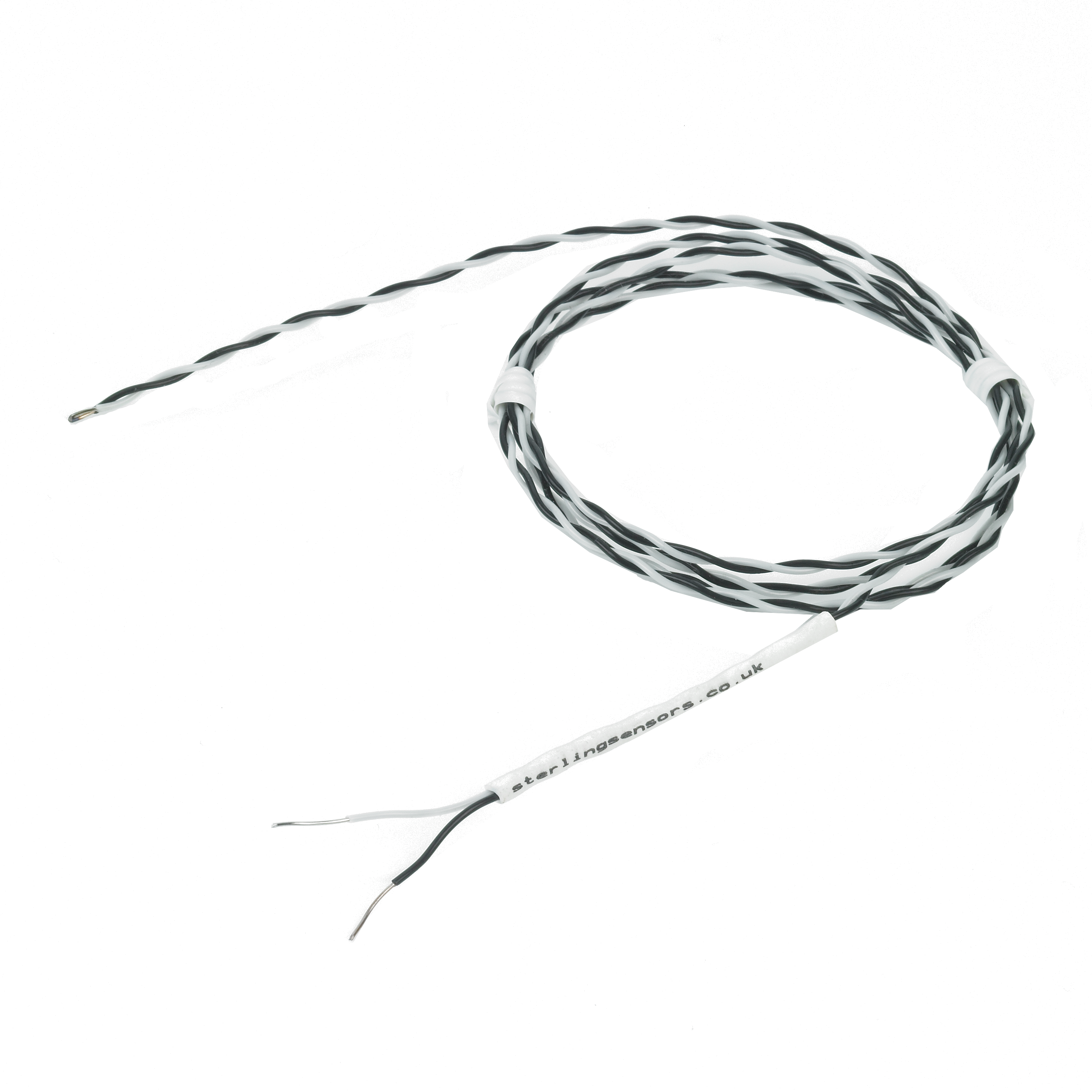
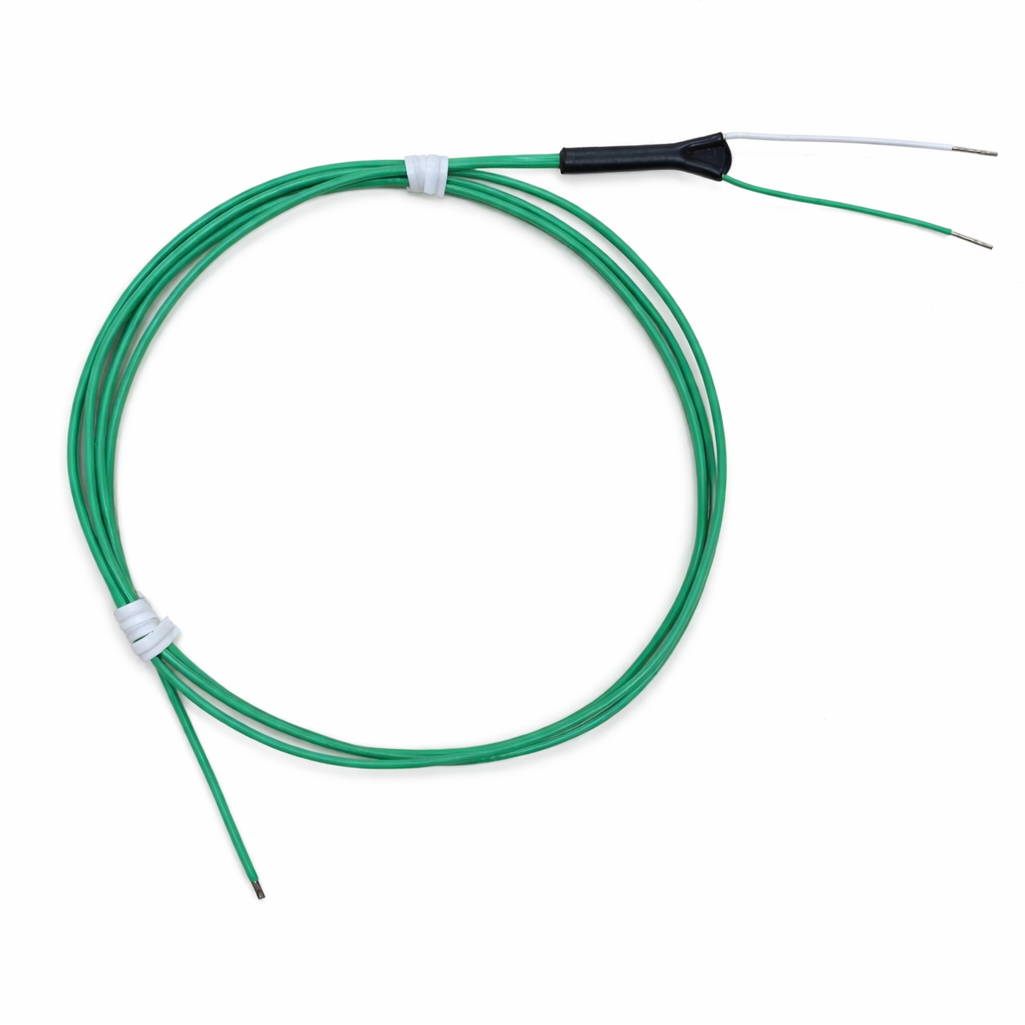
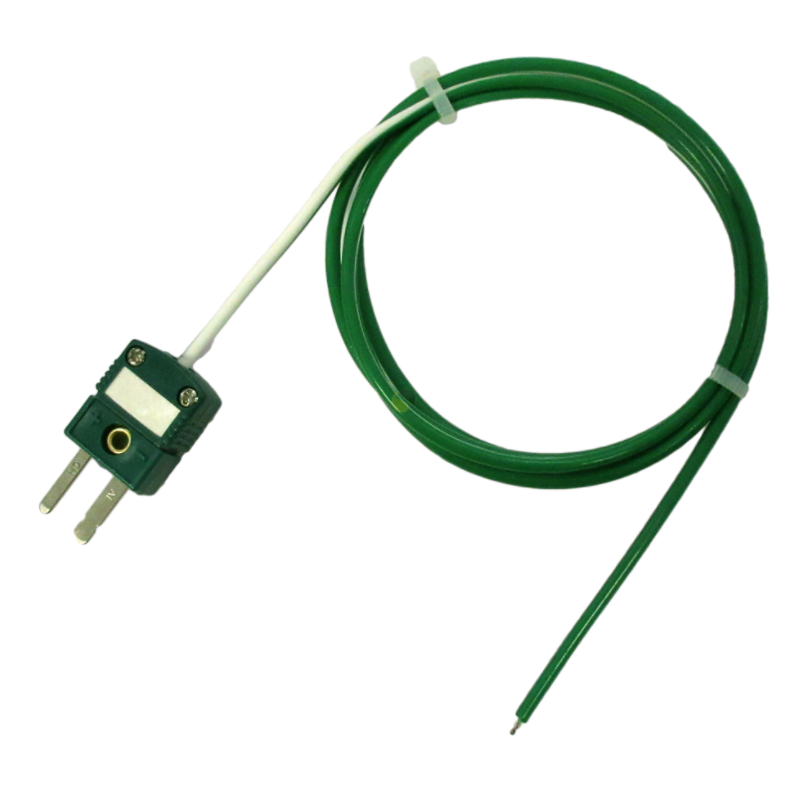
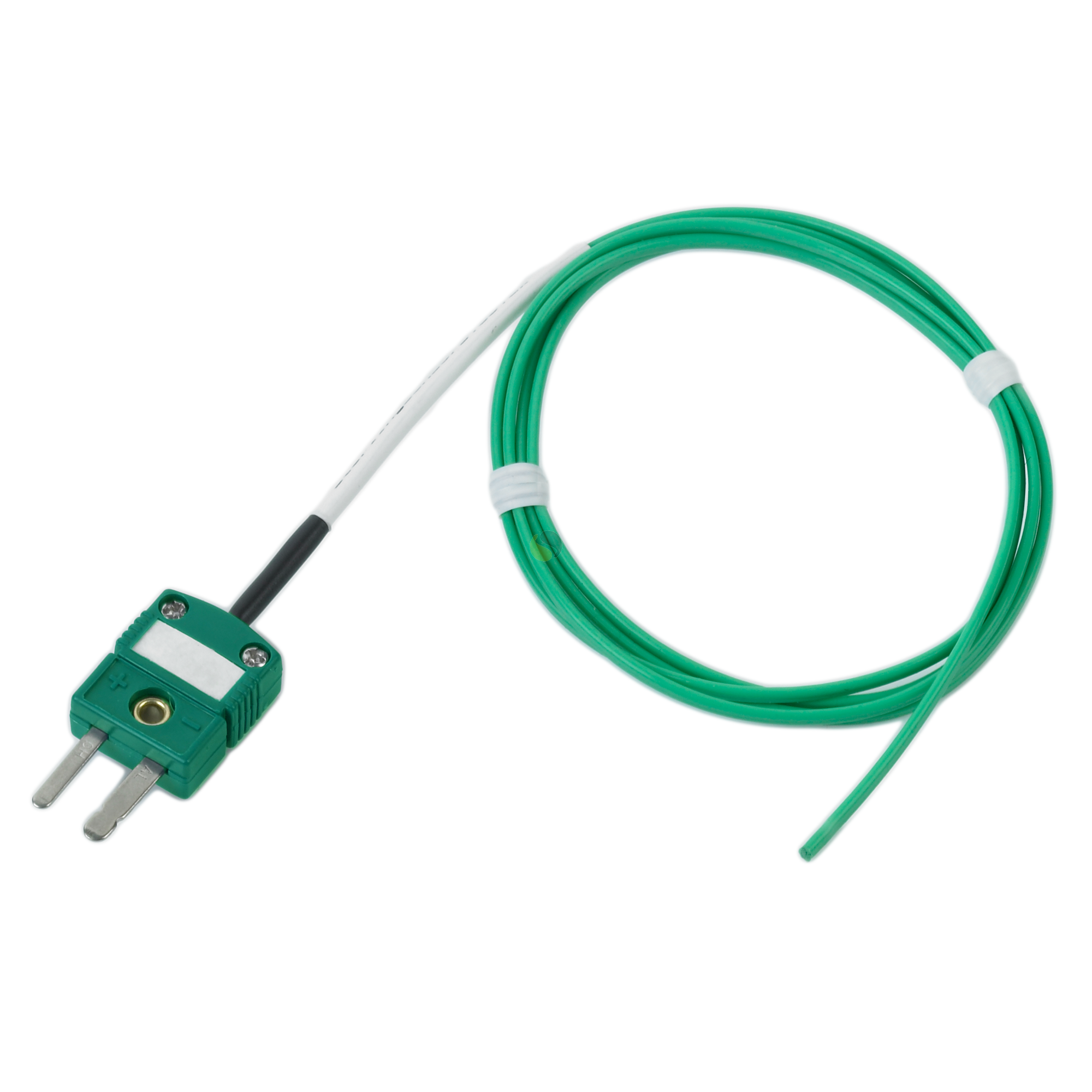
Thermocouple wire is available with a range of insulation materials to suit different operating temperatures and environments. Common insulation options include:

  • PVC: Suitable for general-purpose applications with operating temperatures up to approximately 105°C.
  • PTFE (Teflon®): Offers excellent chemical resistance and is suitable for temperatures up to 260°C.
  • PFA: Provides outstanding chemical resistance and flexibility, with continuous operating temperatures up to 260°C.
  • Fibreglass: Designed for high-temperature applications, typically suitable for continuous temperatures up to 480°C, with specialist grades available for even higher temperatures.

The most suitable insulation depends on factors such as maximum operating temperature, flexibility, moisture exposure, abrasion resistance and chemical compatibility. If you're unsure which construction is best for your application, our engineers can help you select the right thermocouple wire.

Note: Temperature ratings are typical continuous operating limits and may vary depending on the cable construction and manufacturer.


Wire thermocouples are used across a wide range of industries where fast, accurate and reliable temperature measurement is required. Common applications include manufacturing, food and beverage processing, pharmaceuticals, plastics and rubber processing, aerospace, automotive testing, laboratories, research and development, HVAC, heat treatment, furnaces, packaging machinery and OEM equipment.

Thanks to their flexibility, compact design and wide operating temperature range, wire thermocouples are ideal for measuring the temperature of air, gases, liquids, surfaces and machinery in both temporary testing and permanent installations. They are available in a variety of thermocouple types, insulation materials and cable lengths to suit almost any industrial temperature sensing application.

Thermocouples are available in different tolerance grades depending on the level of measurement accuracy required. The most common options are Extension Grade, Standard Limits of Error (SLE) and Class 1.

  • Extension Grade – Used primarily for extension and compensating cables rather than the sensing junction itself. It has wider tolerance limits and is suitable where precise temperature measurement is not critical.
  • Standard Limits of Error (SLE) – SLE stands for Standard Limits of Error and refers to thermocouple materials manufactured to meet the standard accuracy limits defined by ANSI MC96.1. SLE is the most commonly supplied tolerance for industrial thermocouples in the USA, offering an excellent balance between accuracy, performance and cost.
  • Class 1 – Manufactured to tighter tolerances than SLE in accordance with IEC 60584-2, providing higher measurement accuracy for demanding applications such as pharmaceutical, laboratory, aerospace and critical industrial processes.

Choosing the correct tolerance depends on the required measurement accuracy, operating temperature and application. If you're unsure which grade is most suitable, our engineers can help you select the right thermocouple for your process.

Recently viewed